top of page
In those years, money was the shape of bananas.
A shirt stained with tree sap was the attire of the wealthy.
It was the golden age he created, and also the era that imprisoned him in gold—
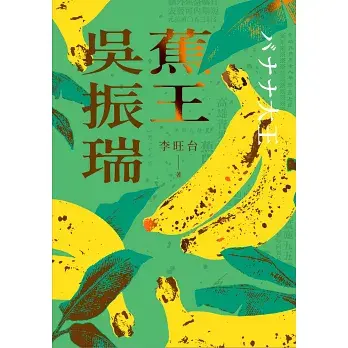
Taiwan's first "God of the Rural Village"
A legendary story of building a prosperous era with the tenacity of a water buffalo.
During the Japanese colonial period, Wu Zhen-rui, a graduate of Kaohsiung Middle School, was an elite student who could have been recommended for university in Taipei. However, due to his father’s words—"Writing poetry is not as good as farming" and "The eldest son is for the household"—he stayed in his hometown to farm. Later, through his father's introduction, he entered the "Banana Research Institute" to learn everything about bananas.
After the war, he used his experience at the institute to become a supervisor and later an elected director of the Fruit and Vegetable Cooperative. Within a few years, he secured the "5/5 system" for banana farmers' production and export, allowing Taiwan bananas to dominate Japan with over 80% market share. In those days, the banana industry and all related businesses flourished with wealth.
His buffalo-like persistence led the rural villages of Southern Taiwan to take flight, but it also led him to prison. Amidst political whispers of internal strife between the "Queen" and "Prince" factions, Wu Zhen-rui repeatedly used his professional expertise to reject a cooperation project with Litton Industries promoted by K.T. Li, accidentally becoming a sacrificial lamb in a political storm. The media smeared him relentlessly, turning the former "Banana King" into a self-serving "Banana Pest." Following large-scale searches and framed charges, he was imprisoned.
"You have to read what’s in the newspaper backwards"—that’s how the farmers spoke of the "Banana Case." On the day Wu Zhen-rui was released and returned home, local villagers flocked to welcome him, still treating him as their benefactor. However, in just over two years, the glory days of Taiwan bananas and the water buffalo had faded. As Wu Zhen-rui led his buffalo "Masha" through the fields for a nostalgic plowing of the rows, power tillers had already driven into this new era.


bottom of page